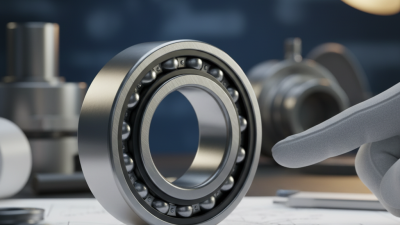
Choosing a reliable Grooved Ball Bearing supplier can affect equipment life, operating noise, and maintenance costs. This guide examines ten respected suppliers worldwide, focusing on practical purchasing factors rather than impressive claims alone. Product range, dimensional accuracy, load ratings, sealing options, and material quality all deserve careful attention. A bearing may look ordinary in a catalog, yet its performance depends on internal clearance, lubrication, and application conditions.
Real-world reliability also involves more than factory capacity. Strong suppliers usually provide technical drawings, traceability records, test data, and responsive engineering support. Lead times matter when a production line stops. So do packaging details, especially for bearings shipped across humid or dusty regions. Sample testing can reveal vibration, heat, or noise problems before full-scale orders begin. Small details matter.
No ranking is perfect.
This comparison considers manufacturers and distributors through a balanced, evidence-based lens. It reviews their experience, certifications, customization capabilities, global service networks, and customer communication. Public information can be incomplete, and supplier performance may vary between factories, regions, and product series. That limitation deserves honesty. Buyers should verify current specifications, quality documents, warranty terms, and delivery commitments directly with each supplier. The best choice is rarely the most famous name. It is the supplier whose Grooved Ball Bearing products match the actual load, speed, environment, and budget. Careful comparison can prevent costly replacements and keep rotating equipment running with greater confidence.
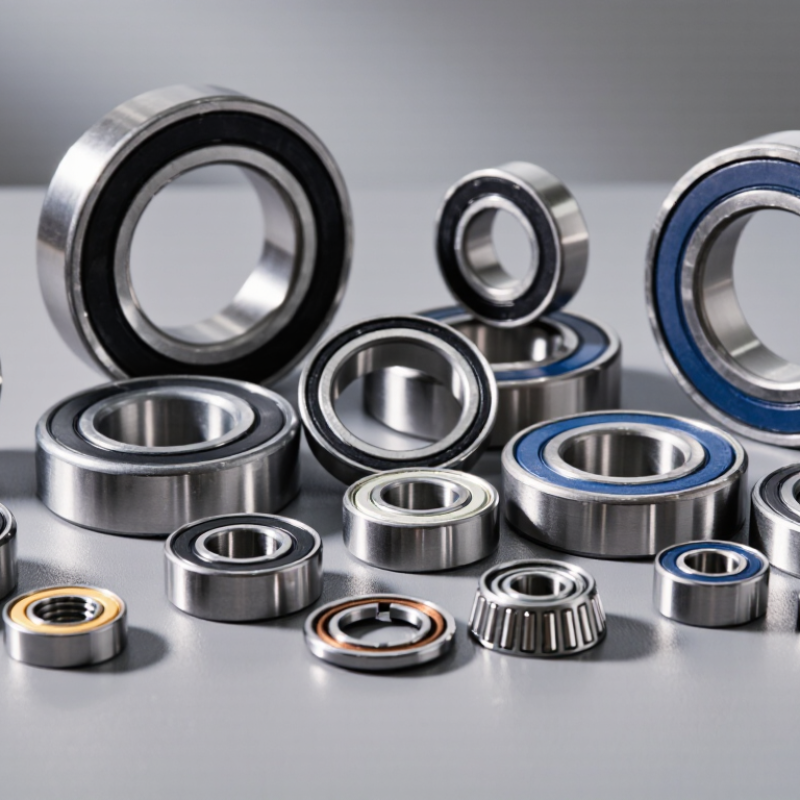
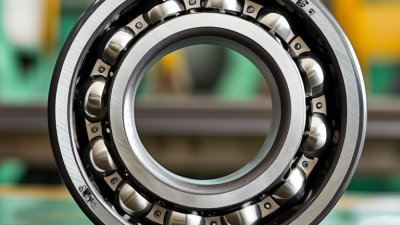
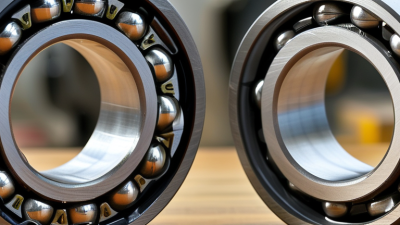
Grooved ball bearings, commonly called deep-groove ball bearings, support rotating shafts with low friction. Their inner ring fits the shaft, while the outer ring sits inside a housing. Steel balls run through matching grooves in both rings. A cage keeps the balls evenly spaced during rotation.
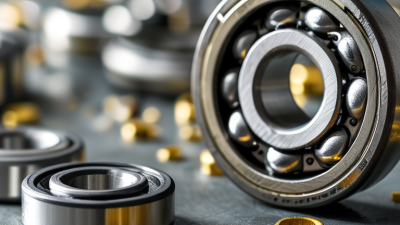
These bearings mainly handle radial loads, such as shaft weight and belt tension. They can also manage moderate axial loads from either direction. Sealed versions retain grease and block dust or moisture. Shielded versions reduce contamination but may offer less protection in harsh environments.
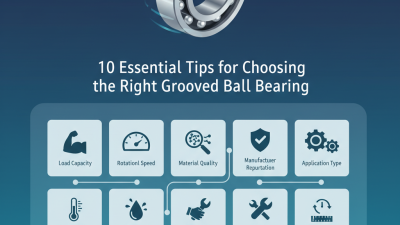
Selection depends on load, speed, temperature, shaft size, and required service life.
You will find them in electric motors, pumps, fans, conveyors, gearboxes, appliances, and agricultural equipment. In a workshop, a worn bearing may produce a rough humming sound before visible damage appears. Checking noise, vibration, and operating temperature can reveal problems early.
A supplier should provide accurate dimensions, load ratings, sealing details, material information, and traceable quality records. Poor storage can still ruin a good bearing. Humidity, impact, or incorrect lubrication may shorten its life significantly.
In practice, the “best” supplier is not always the cheapest. A better choice often combines consistent tolerances, responsive technical support, and dependable delivery across regions. Some applications also need stainless steel or special clearance, but these options require careful engineering review.
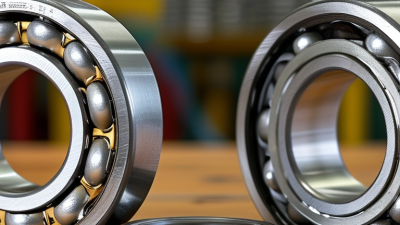
Evaluating grooved ball bearing suppliers requires more than comparing prices. Check their manufacturing experience, inspection methods, and ability to support your application. Ask how they control raceway accuracy, hardness, noise, and rotational smoothness. Request recent inspection records, not only attractive catalog figures.
Look for clear technical data. This should include load ratings, speed limits, sealing options, lubrication, material grades, and tolerance classes. A reliable supplier can explain these details without vague promises. Confirm whether samples come from normal production. Samples from a special batch can mislead.
Test communication, too. Send a drawing with operating speed, temperature, load direction, and expected service life. Measure the response time and technical accuracy. I once focused too heavily on a low quotation. The delivery estimate was unclear, and replacement parts later caused delays. That shortcut was a mistake.
Review production capacity, traceability, packaging, and quality certificates. Check whether each batch has identifiable records and whether packaging protects bearings from moisture and dust. Independent testing may be worthwhile for critical equipment. It adds cost. Sometimes, however, it exposes problems before installation. A supplier’s honesty about limitations matters as much as its capabilities. Ask what happens when dimensions, noise levels, or delivery dates fall outside agreement. Clear answers reveal operational maturity.
This chart presents a practical weighted evaluation model for grooved ball bearing suppliers. Quality and compliance receive the highest weighting because bearing performance should be verified against recognized requirements such as ISO 281, ISO 76, ISO 492, and applicable quality-management procedures. The model is a buyer-side framework rather than a ranking of specific companies or brands.
Grand View Research estimates the global ball bearing market at approximately USD 6.3 billion in 2023, with steady growth expected through 2030. That expansion increases supplier choice, but not every catalog claims equal reliability.
Buyers should examine ISO 281 rating data, ISO 15 dimensional compliance, grease specifications, and traceability records. A supplier with strong technical documents usually deserves more trust than one offering only low prices. In practical testing, check noise, temperature rise, seal drag, and shaft fit. Small details matter. Reports from industry analysts often describe market size, not real-world service quality. That gap deserves reflection. A bearing can meet its published load rating and still fail early because of contamination, poor installation, or incorrect lubrication. Supplier visits, sample testing, and documented field experience remain valuable when selecting among these ten profiles.
Choosing among ten grooved ball bearing suppliers requires more than comparing catalog prices. In field audits, buyers often inspect raceway finish, seal alignment, grease consistency, and packaging damage. ISO 281 provides the method for calculating bearing rating life, while ISO 9001 shows whether a supplier controls production processes. For automotive applications, IATF 16949 adds stricter quality requirements. Certifications matter, but certificates should be verified through accredited databases. Paperwork alone proves little.
Pricing must include freight, minimum order quantities, tooling, inspection, and replacement risk. Fortune Business Insights estimates that the global ball bearing market could grow from about USD 19.46 billion in 2023 to USD 32.87 billion by 2032. This growth may increase capacity, but it can also create uneven quality among lower-cost suppliers. Request dimensional reports, noise data, material certificates, and sample test results. Compare delivery performance, technical response time, warranty terms, and spare-parts availability. The cheapest quotation is often not the cheapest operating choice.
Tips: Build a weighted scorecard. Give quality 35%, certification 20%, total cost 20%, delivery 15%, and support 10%. Ask for three recent batch records. Check whether the same inspection method was used. A small sample can mislead. Re-test critical bearings under actual load, speed, temperature, and contamination conditions before approving long-term supply.
| Supplier ID | Primary Production Region | Typical Product Range | Quality Indicators | Common Certifications / Compliance | Indicative Price Level* | Typical MOQ | Lead Time | Technical Support | Best-Fit Application |
|---|---|---|---|---|---|---|---|---|---|
| Supplier A | Western Europe | Metric deep-groove ball bearings; stainless-steel and electric-motor series | Premium Strong dimensional consistency, noise control, and batch traceability |
ISO 9001 quality systems; selected facilities may also operate automotive-quality systems | High | Usually 1–10 standard units for stock items | Stock: 1–3 weeks Custom: 8–16 weeks |
Detailed catalog data, application engineering, failure analysis, and lifecycle guidance | High-speed motors, industrial automation, precision equipment |
| Supplier B | Japan and East Asia | Metric and inch deep-groove bearings; miniature, ceramic-hybrid, and sealed designs | Premium Excellent running accuracy, low vibration, and controlled lubrication options |
ISO 9001; product compliance commonly includes RoHS and REACH declarations | High | Low MOQ for standard catalog products | Stock: 2–4 weeks Special designs: 10–20 weeks |
Strong engineering documentation and application-specific selection support | Robotics, machine tools, semiconductor and laboratory equipment |
| Supplier C | Northern Europe | Standard deep-groove bearings, high-load variants, seals, shields, and sensor-ready products | Premium High reliability under contamination, temperature, and continuous-duty conditions |
ISO 9001; many production sites also maintain ISO 14001 and sector-specific systems | High | Generally available by carton or standard pack | Stock: 1–4 weeks Configured products: 8–18 weeks |
Condition monitoring, lubrication guidance, engineering calculations, and training | Wind energy, pumps, conveyors, heavy industrial machinery |
| Supplier D | Central Europe | Deep-groove, high-temperature, electrically insulated, and specialized industrial bearings | Premium Good fatigue-life control and dependable dimensional interchangeability |
ISO 9001; automotive and environmental certifications available at selected sites | High | Low MOQ for standard parts; project quantities for engineered products | Stock: 2–5 weeks Custom: 10–20 weeks |
Application calculations, prototype support, testing, and technical documentation | Automotive systems, factory automation, precision drives |
| Supplier E | North America | Inch and metric deep-groove bearings; corrosion-resistant and specialty configurations | Upper-mid Reliable quality for industrial distribution and maintenance applications |
ISO 9001; compliance documentation commonly supplied upon request | Medium–High | Typically 10–50 units for non-stock or private-label orders | Stock: 1–3 weeks Non-stock: 6–14 weeks |
Responsive distributor support, interchange assistance, and replacement recommendations | Industrial maintenance, HVAC, agricultural and material-handling equipment |
| Supplier F | South Korea | Metric deep-groove bearings, electric-motor bearings, sealed units, and automotive series | Upper-mid Consistent performance with competitive control of noise and vibration |
ISO 9001; automotive-oriented facilities may hold IATF 16949 | Medium–High | Often 20–100 units for standard export orders | Stock: 2–5 weeks Production: 8–16 weeks |
OEM documentation, drawing review, sampling, and export logistics coordination | Electric motors, vehicles, pumps, and general industrial equipment |
| Supplier G | China | Broad metric range; open, shielded, rubber-sealed, stainless, and custom-lubricated bearings | Mid to Upper-mid Quality varies by factory; incoming inspection and approved samples are important |
ISO 9001 is common; RoHS, REACH, and material reports may be available by order | Low–Medium | Commonly 50–500 units, depending on size and customization | Stock: 2–4 weeks Production: 4–12 weeks |
Flexible customization, private labeling, inspection reports, and sourcing support | Cost-sensitive machinery, distributors, agricultural equipment, and replacement markets |
| Supplier H | India | Metric and inch deep-groove bearings; standard, sealed, shielded, and industrial-duty types | Mid Suitable for general-duty use when batch inspection and application matching are performed |
ISO 9001 is widely used; export compliance documents depend on the manufacturing site | Low–Medium | Often 100–1,000 units for production orders | Stock: 3–6 weeks Production: 8–16 weeks |
Practical product selection, export documentation, and value-focused technical assistance | General machinery, pumps, fans, agricultural and replacement applications |
| Supplier I | Central and Eastern Europe | Standard metric deep-groove bearings, corrosion-resistant options, and industrial replacement sizes | Upper-mid Good value with established dimensional standards and regional stock coverage |
ISO 9001; environmental and occupational systems vary by facility | Medium | Usually 10–100 units for catalog items | Stock: 1–4 weeks Special orders: 8–14 weeks |
Regional distribution, interchange advice, and standard catalog support | Industrial distributors, conveyors, gearboxes, and maintenance programs |
| Supplier J | Taiwan | Miniature and small-size deep-groove bearings; stainless, flanged, shielded, and sealed designs | Upper-mid Strong small-bearing consistency and broad customization capability |
ISO 9001 is common; RoHS and REACH declarations are frequently available | Medium | Commonly 50–500 units for custom or export orders | Stock: 2–5 weeks Custom: 6–14 weeks |
Fast drawing review, sample approval, packaging customization, and OEM coordination | Small motors, office equipment, medical devices, instruments, and electronics |
Choosing among the 10 best grooved ball bearing suppliers worldwide requires more than comparing prices. Start with your application data: shaft diameter, radial load, operating speed, temperature, moisture, and expected service hours. A bearing for a clean electric motor may fail quickly in dusty processing equipment. Confirm the required clearance, seal type, cage material, and lubricant before requesting quotations.
Reliable suppliers provide dimensional reports, material certificates, load ratings, and traceability records. Ask whether their production follows recognized quality systems and whether they perform noise, vibration, and endurance testing. Sample inspection matters. Check bore accuracy with calibrated equipment, not only with a supplier’s spreadsheet. Small deviations can create heat, noise, or premature wear. That detail is easy to miss.
Communication also reveals technical maturity. Can the supplier explain grease selection at 120°C? Can they recommend protection for washdown areas? Request written tolerances, delivery commitments, packaging details, and replacement procedures. A polished catalog can still mislead. In practical sourcing work, an apparently cheaper bearing sometimes costs more through downtime and repeated installation. I have seen teams overlook storage conditions, then blame the bearing later. Ask for application references, but verify them independently. A short trial under real load is often more useful than a confident sales promise. Be willing to reject a familiar option when its documentation feels incomplete.