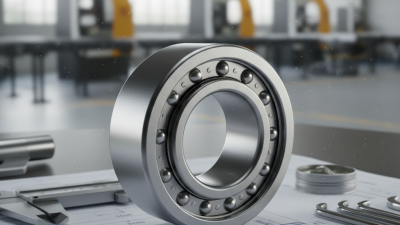
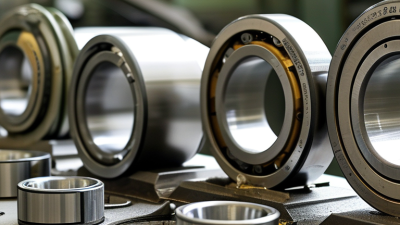
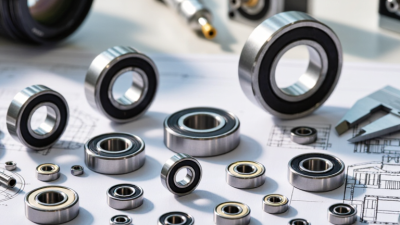
Choosing the right V Groove Ball Bearing can influence guide accuracy, noise levels, service life, and maintenance costs. This guide introduces ten practical bearing types for global buyers. It considers common designs, groove profiles, materials, shields, seals, and mounting options. Each type serves a different operating need. Some support smooth linear motion, while others fit conveyor tracks, doors, rollers, or compact positioning systems.
Real purchasing decisions require more than comparing prices. Buyers should review radial load, axial load, speed, temperature, lubrication, corrosion exposure, and available installation space. A stainless steel bearing may suit humid environments, while a carbon steel option can offer better value in controlled conditions. Sealed versions help limit dust and moisture entry, but seal friction may affect motion resistance. Small details matter.
No ranking is universal. A bearing that performs well in a clean workshop may fail early near abrasive dust or washdown equipment. Product catalogs can also simplify complex specifications too much. Therefore, this overview encourages readers to verify dimensions, tolerances, material claims, and supplier documentation before ordering. Relevant standards and inspection records should support technical comparisons. Experienced engineers often test a sample under realistic loads before approving a larger shipment. That step is easy to skip. It should not be. By combining application knowledge, transparent sourcing, and careful specification checks, global buyers can select a V Groove Ball Bearing with greater confidence and fewer costly surprises.
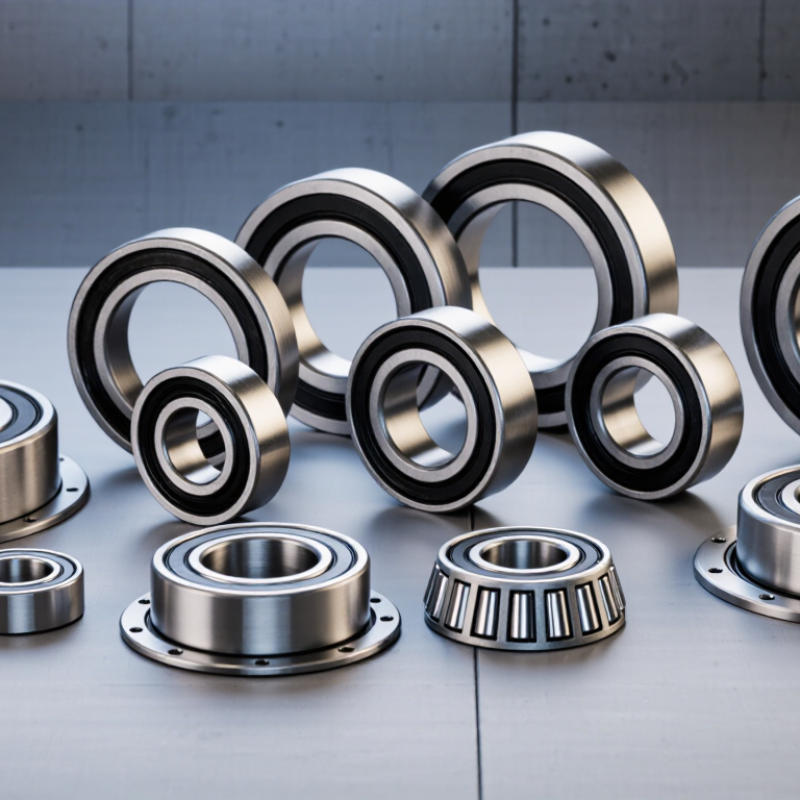
V-groove bearing basics begin with clear terminology. ISO 5593 defines terms such as inner ring, outer ring, rolling element, cage, radial clearance, and bearing load. It does not create ten official V-groove bearing categories. In purchasing practice, buyers commonly compare ten forms: open single-row, shielded, sealed, stainless-steel, flanged, double-row, full-complement, miniature, ceramic-hybrid, and corrosion-resistant sealed bearings. The V-shaped track is usually machined into the outer ring. It guides the bearing along a rail or edge.
Each type suits a different working condition. Open bearings support easier cleaning but need controlled environments. Sealed bearings retain grease and resist dust. Stainless-steel versions help in humid areas, while ceramic hybrids can reduce electrical damage and heat. Flanged designs simplify axial positioning. Double-row and full-complement options handle higher loads, though friction may increase. A miniature bearing fits compact equipment, but its lower load capacity is easy to overlook. This taxonomy is practical, not perfect.
Tips: Confirm groove angle, rail profile, bore size, speed, load direction, and sealing needs before ordering. Check whether the outer ring contacts a flat rail or a matching V track. Measure radial clearance when precision matters. Do not assume stainless steel prevents every form of corrosion. Dirt, misalignment, and excessive preload still cause early failure. A small drawing often reveals mistakes that a product table hides.

V groove ball bearings support guided movement on rails, tracks, and custom channels. The right design depends on load, contamination, alignment, and maintenance access. Flanged bearings help control lateral movement and reduce the risk of derailment. Single-flange designs suit lighter guidance, while double-flange types offer stronger side control. Stud-mounted bearings simplify installation on frames and brackets. Concentric studs provide predictable positioning, whereas eccentric studs allow small alignment corrections.
Sealed bearings use contact or non-contact seals to resist dust, moisture, and grease loss. Shielded bearings reduce particle entry while creating less sealing drag, but they are not fully waterproof.
Stainless steel designs perform better in humid, washdown, or corrosive environments. They may still need suitable lubrication and regular inspection.
Other useful choices include heavy-load V groove bearings, narrow-profile versions, and precision-ground designs for smoother travel. These categories often overlap, so product names can be confusing.
Tips:
Match the groove angle to the rail profile before comparing prices. Check radial load, axial load, speed, temperature, and mounting space. Measure the actual rail; small errors can create uneven wear. A sealed bearing is not automatically the best choice. In clean, high-speed equipment, excess seal friction may matter. Stainless steel can improve service life, but it may carry less load than hardened steel. No selection is perfect. Testing one bearing under real operating conditions can reveal weaknesses that catalogs miss. Supplier drawings, material certificates, clearance data, and inspection records also improve purchasing reliability.
Global buyers often compare ten V groove ball bearing types by bore size, seal design, material, and guide-track fit. Load and speed ratings reveal more than appearance.
Single-row, double-row, stainless, shielded, sealed, miniature, flanged, ceramic-hybrid, full-complement, and corrosion-resistant designs suit different duties.
Under ISO 281, basic rating life is calculated from L10 = (C/P)p million revolutions . C represents the dynamic load rating, while P is the equivalent applied load. For ball bearings, p equals 3.
A bearing with 20% higher C can offer much longer theoretical life when loads remain identical. That advantage disappears if alignment is poor.
ABMA C-values provide a practical comparison for dynamic capacity. Buyers should compare values at the same bore, clearance, and operating conditions.
Do not compare one catalog’s C-value with another catalog’s maximum load. They may describe different test methods or assumptions.
Speed requires separate attention.
A metal-shielded bearing may run faster than a heavily sealed version. However, heat, dust, and intermittent shock can reduce real service life. The ISO result is a calculation, not a promise. A spreadsheet can still mislead. Field experience matters.
Small errors count.
A V groove running against a rough track may generate vibration before calculated fatigue life ends. Measure preload, track hardness, temperature, and mounting accuracy.
Record actual duty cycles, then recalculate P instead of relying on one constant load.
Precision starts with the fit, not the catalog name. ISO 492:2014 defines dimensional and running accuracy tolerances for radial rolling bearings. Standard P0 suits many guide-wheel applications. P6, P5, P4, and P2 provide progressively tighter control. However, higher precision does not automatically improve performance. A loose housing, bent rail, or uneven mounting surface can waste that accuracy.
For global buyers, confirm bore diameter, outside diameter, width, and radial runout before selecting a V-groove profile. Sealed carbon-steel bearings support common factory guides. Stainless-steel versions resist moisture and cleaning chemicals. Hybrid ceramic designs can reduce friction, but their value depends on speed, load, and lubrication. The U.S. Department of Energy reports that motor-driven systems consume more than 70% of industrial electricity. Efficient rolling contact therefore deserves practical attention, not only marketing claims.
A field inspection often reveals the real problem. A bearing may meet ISO tolerance, yet bind after installation. Check shaft fit, housing interference, preload, and groove alignment together. ISO 492 does not define every application condition. That limitation matters. Buyers should request inspection records, material certificates, and measured runout data. Tolerance labels alone are incomplete evidence. Sometimes, a simpler P0 bearing with accurate mounting outperforms a premium class installed carelessly. According to the U.S. DOE Motor Systems Market Assessment, reducing mechanical losses can support broader system efficiency, but results depend heavily on alignment and maintenance.
Top 10 V Groove Ball Bearing Types for Global Buyers
Selection starts with the groove profile, load direction, seal design, and installation space. ISO 15:2017 provides standard boundary dimensions for radial rolling bearings. Buyers should match bore, outside diameter, and width against verified drawings. A 2RS seal may suit dusty conveyors, while an open type supports easier relubrication. Stainless steel options resist moisture, but they can carry different loads. Do not select by price alone.
Compliance needs evidence, not attractive wording. RoHS restricts ten substances under the current European framework, including lead, mercury, and certain phthalates. However, a bearing may fall outside direct RoHS scope when sold separately. The complete motor or electrical assembly may still require assessment. The 2024 Global E-waste Monitor recorded 62 million tonnes of electronic waste in 2022. That figure makes material traceability less optional. Ask for material declarations, test methods, and document revision dates.
REACH checks require a current SVHC screening, because the ECHA Candidate List changes over time. Request a signed declaration for steel, seals, grease, coatings, and packaging materials. Packaging deserves attention too. Eurostat reported 186.5 kilograms of packaging waste per EU resident in 2022. Use compact cartons, corrosion-resistant inner bags, and readable batch labels. A certificate alone can mislead. Supplier documents may omit grease or adhesive details. The practical weakness is usually incomplete paperwork, not the bearing geometry.
ISO 15 size references, RoHS and REACH verification, and packaging checks
The chart compares the nominal outside diameter of ten commonly sourced ISO 15 radial ball-bearing size references used in V-groove wheel and guide assemblies. The dimensions shown in parentheses are bore × outside diameter × width in millimetres. ISO 15 defines bearing boundary dimensions; the V-groove angle, groove radius, seal type, load rating, and material must be confirmed separately.
For global purchasing, request current RoHS and REACH declarations, confirm the applicable substance and article requirements, and check that packaging includes the bearing designation, size, quantity, batch or lot traceability, corrosion protection, and export-marking information.