China Top Taper Roller Bearing Suppliers?
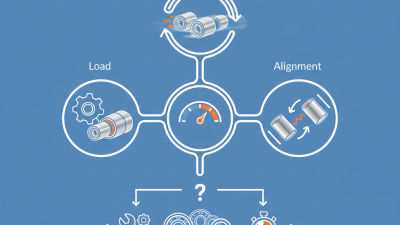
Choosing a reliable Chinese supplier requires more than comparing catalogue prices. A Taper Roller Bearing must support radial and axial loads, maintain alignment, and survive heat, vibration, and contaminated conditions. Supplier capability becomes visible in small details. Look for controlled heat treatment, accurate raceway grinding, clean assembly areas, and complete material traceability.
Henry Timken, a pioneer in tapered bearing technology, stated, “The purpose of business is to serve the customer.” This principle remains practical today. A dependable supplier should explain its steel grades, tolerance classes, lubrication options, and inspection methods clearly. It should also provide test records rather than broad promises. ISO 9001 certification helps, but certification alone proves little. Process discipline matters more.
Real-world evaluation should include sample testing and factory communication. Ask how the company controls cage fit, roller crowning, surface roughness, and preload. Check whether production follows ISO 355 or equivalent dimensional requirements. For automotive applications, IATF 16949 may offer stronger evidence of process maturity. For industrial equipment, batch consistency and replacement support can matter more than branding.
No shortlist is perfect. A polished website can hide weak technical support. A smaller manufacturer may offer better engineering cooperation. That possibility deserves attention. Buyers should compare inspection reports, delivery history, warranty terms, and failure feedback before signing a contract. The best China Taper Roller Bearing suppliers combine stable manufacturing with honest communication. They do not simply sell bearings. They help customers reduce noise, downtime, premature wear, and costly returns.
China Top Taper Roller Bearing Suppliers?
China’s tapered roller bearing market remained active in 2024, supported by automotive, industrial machinery, and export demand. Production typically covers forging, turning, heat treatment, precision grinding, and final assembly. Output is not only about tonnage. Dimensional consistency matters more.
Manufacturers increasingly use automated inspection, digital traceability, and cleaner heat-treatment equipment. These changes help control hardness, noise, and service life. Still, production capacity varies widely between facilities. A large catalog does not always indicate stable quality. Buyers should review inspection records, material certificates, process controls, and independent test results before selecting a supplier.
Applications continue to expand across wheel hubs, gearboxes, mining equipment, construction machinery, agricultural machines, rail systems, and wind-power drives. In heavy equipment, tapered rollers must manage combined radial and axial loads under shock conditions. In 2024, demand also moved toward customized dimensions, shorter development cycles, and energy-efficient manufacturing. That sounds positive, but customization can increase tooling costs and complicate replacement planning. Practical supplier reviews should include sample testing, load calculations, lubrication requirements, and after-sales response. A small trial order may reveal more than a polished presentation.

China’s leading taper roller bearing suppliers are increasingly judged by certification, not price alone. ISO 9001 supports controlled design, machining, inspection, and corrective action. ISO 14001 adds measurable environmental controls across energy, waste, and coolant management. The ISO Survey of Certifications 2022 recorded 1,265,216 ISO 9001 certificates and 529,853 ISO 14001 certificates worldwide. These figures show broad adoption, but certification depth still differs between factories.
For automotive applications, IATF 16949 deserves closer attention. It requires stronger risk analysis, traceability, process audits, and customer-specific controls. The IATF 16949 certification scheme also emphasizes continual improvement and defect prevention. A qualified Chinese supplier should provide current certificates, accredited registration details, audit scope, and manufacturing-site addresses. Check the bearing line itself. Some certificates cover only selected processes.
Small details matter. Ask for heat-treatment records, roller geometry reports, raceway roughness data, and batch-level inspection results. A capable supplier should explain its CpK targets and nonconforming-product procedure without hesitation. ISO certification is useful evidence, not proof of perfect bearings. A certificate can remain valid while daily discipline weakens. That uncomfortable possibility deserves an on-site audit. Procurement teams should compare certification status with field returns, delivery performance, and independent dimensional testing before approving a long-term source.
Tapered roller bearing performance depends on more than catalog size or price. Engineers should compare dynamic load rating C, static load rating C₀, and the 90% L₁₀ rating. ISO 281:2007 defines C as the constant load a bearing can carry for one million revolutions, under standard conditions. For roller bearings, the life equation uses an exponent of 10/3: L₁₀ = (C/P)¹⁰⁄³ million revolutions Here, P represents the equivalent dynamic bearing load.
The L₁₀ value indicates 90% reliability. In other words, 90% of identical bearings should reach or exceed the calculated life. Ten percent may fail earlier. That detail is easy to miss. C₀ addresses static safety instead. ISO 76 evaluates permanent deformation caused by heavy stationary or shock loads. A bearing may achieve a strong L₁₀ result but still suffer brinelling when C₀ is inadequate.
Supplier evaluations should request load-rating calculations, steel cleanliness data, heat-treatment records, and dimensional inspection results. ANSI/ABMA 11 provides recognized terminology and rating guidance for rolling bearings. These documents improve comparison between Chinese taper roller bearing suppliers, especially when quoted ratings appear unusually high.
However, catalog values are not operating evidence. Lubrication, misalignment, contamination, and mounting preload can reduce real service life sharply.
A careful buyer should verify the assumed P value and speed range. Otherwise, the calculation may look precise while remaining weak. That is the uncomfortable part. Performance claims need test records, not attractive tables.
Comparing Chinese tapered roller bearing suppliers requires more than checking unit price. Start with ISO 355 size designations, including bore, outside diameter, and bearing width. These dimensions determine whether the bearing fits an existing housing. Ask suppliers for certified dimensional drawings and traceable inspection reports. Small differences can create mounting problems.
Precision classes also deserve close attention. Standard applications may accept normal tolerances, while machine tools often require tighter running accuracy. Confirm the stated class against the relevant ISO tolerance standard, not only the supplier’s catalog wording. Review radial runout, axial runout, and surface finish data. A polished specification sheet is not enough.
Load capacity should be compared using dynamic and static ratings, not maximum marketing claims. Calculate radial and axial loads together, because tapered rollers handle both. Check the basic rating life, contact angle, lubrication method, and operating speed. Heat treatment records and batch testing add practical confidence. Factory audits can reveal storage issues, measuring equipment quality, and inconsistent packaging. They take time.
In real purchasing work, supplier comparisons are rarely perfect. Some test data may represent selected samples rather than every production batch. I would request recent reports from the exact ISO 355 size under review. Then compare results across several batches. A lower-cost bearing may appear suitable, yet poor preload control can shorten service life. Careful verification remains essential.
Choosing a Chinese taper roller bearing supplier requires more than comparing online prices. Automotive, mining, and industrial equipment demand different load ratings, sealing methods, and operating tolerances. Ask for technical drawings, material specifications, heat-treatment records, and measured clearance data. A polished catalog is not proof.
For automotive use, check fatigue testing, noise control, dimensional consistency, and batch traceability. Mining applications need stronger protection against dust, shock loads, vibration, and water. Industrial machinery may require customized bores, special cages, or high-temperature grease. Request samples from the same production line used for volume orders. Test them under realistic loads.
Factory verification matters. Review production equipment, inspection procedures, calibration records, and nonconformance handling. Independent testing can confirm hardness, runout, friction, and service life. Confirm packaging quality, delivery capacity, replacement policies, and technical communication. Clear drawings prevent expensive misunderstandings.
I have learned that the cheapest quotation can hide uneven quality or weak support. Some suppliers provide excellent samples but struggle with stable mass production. Keep this risk visible. Use a written specification, staged approvals, and regular quality reports before committing to large automotive, mining, or industrial orders.