Choosing the right cylindrical roller bearing is rarely a simple catalog exercise. Global buyers must compare load capacity, speed limits, internal clearance, lubrication, sealing, and supply consistency. The keyword “Bearing Roller Cylindrical” may describe many products, but performance depends on application details.
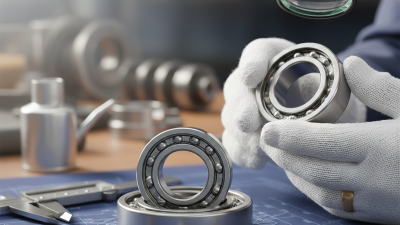
In my experience, a bearing that looks suitable on paper can fail early in a dusty steel mill or a humid port. Shaft alignment matters. Housing accuracy matters too. So does the installer’s handling. A clean workbench, a calibrated torque tool, and correct induction heating can protect years of service. Small details matter.
Tedric A. Harris, a widely respected authority on rolling-bearing analysis, stated, “The bearing is a machine element designed to support loads while permitting relative motion.” This principle remains practical for buyers today. A top cylindrical roller bearing should offer dependable radial-load performance, stable geometry, traceable materials, and clear technical documentation. Buyers should review dynamic load ratings, fatigue life calculations, operating temperature, cage design, and inspection records. Brand reputation helps, but it cannot replace engineering verification.
There is no universal winner. A bearing optimized for heavy industrial loads may be unsuitable for a high-speed gearbox. Sealed designs can simplify maintenance, yet they may create additional friction. Open designs support relubrication, but demand better contamination control.
That compromise deserves attention.
This guide examines leading cylindrical roller bearing options for international buyers. It focuses on measurable performance, practical installation, supplier reliability, and the limits of product claims. Some recommendations may require reconsideration after testing. That is not a weakness. It is responsible engineering.
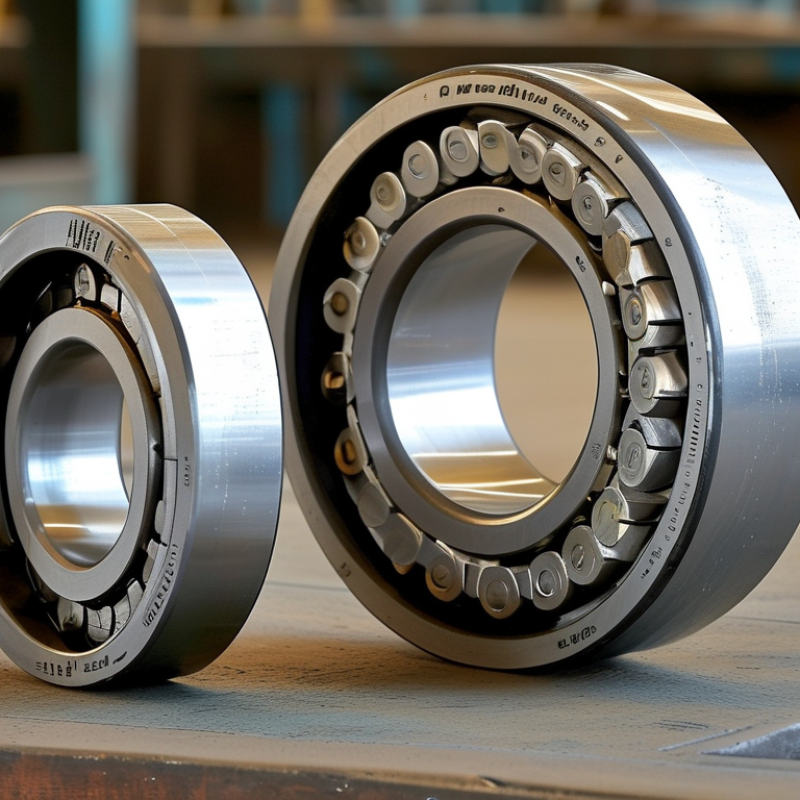
For global buyers, cylindrical roller bearings should be selected by movement requirements, not size alone. The NU, NJ, NUP, and N designs manage radial loads differently.
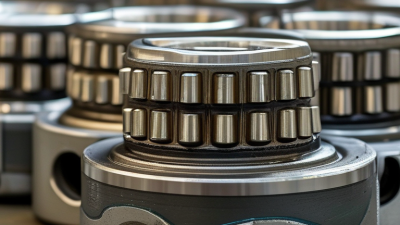
NU bearings have two flanges on the outer ring and none on the inner ring. Their inner ring can move axially, which suits one floating shaft position. N bearings reverse this arrangement. The inner ring has two flanges, while the outer ring has none. This design also permits axial displacement and often supports simple housing layouts.
NJ bearings include two outer-ring flanges and one inner-ring flange. They locate the shaft axially in one direction. This makes them useful when thermal expansion must move toward one side. NUP bearings add a loose flange ring beside the fixed inner flange. They can locate the shaft in both directions, but assembly requires closer attention. Small errors matter.
In maintenance work, incorrect axial control is a frequent cause of overheating and edge wear. The bearing may look suitable on a catalogue page. It may still fail in service. Check radial load, shaft fits, internal clearance, lubrication, speed, and housing alignment together. For example, a long conveyor shaft may need an NU bearing at the floating position and an NJ or NUP bearing at the locating position. That choice depends on expansion and mounting details. Never assume both ends should use the same design. A careful review of operating temperature is often missed.

Top Cylindrical Roller Bearings for Global Buyers
ISO 281:2007 defines basic rating life, L10, as the life reached by 90% of identical bearings under laboratory conditions. For cylindrical roller bearings, the life equation uses an exponent of 10/3. L10 is measured in millions of revolutions. Dynamic load rating, C, represents the bearing’s calculated load capacity, expressed in newtons or kilonewtons.
The relationship is powerful, but easy to underestimate. If two bearings carry the same load, a 20% higher C can produce nearly 1.9 times the calculated L10 life. The calculation is 1.2 raised to 10/3. However, doubling the applied load reduces life to roughly one-tenth. These figures follow ISO 281:2007 and its amended reliability guidance, not a marketing estimate. Check the load spectrum carefully.
Real machines are less cooperative. Dust, poor lubrication, shaft misalignment, and mounting damage can shorten actual life. ISO 281 therefore works best as a comparison tool, not a guarantee. A bearing selected only by its largest C value may still fail early. I have seen maintenance teams overlook fluctuating radial loads during startup. That mistake is costly. Global buyers should compare C, expected load, speed, lubrication, and contamination control together. The calculated L10 remains useful, but it is only one disciplined estimate.
| Bearing Design | Bore d (mm) |
Outside Diameter D (mm) |
Width B (mm) |
Dynamic Load Rating C (kN) |
Static Load Rating C0 (kN) |
Test Load P (kN) |
ISO 281 L10 million revolutions |
Relative L10 Life vs. smallest size |
|---|---|---|---|---|---|---|---|---|
| NU 205 | 25 | 52 | 15 | 39.7 | 31.5 | 10.0 | 99 | 1.00× |
| NU 206 | 30 | 62 | 16 | 49.5 | 42.5 | 10.0 | 207 | 2.09× |
| NU 207 | 35 | 72 | 17 | 66.5 | 60.0 | 10.0 | 551 | 5.57× |
| NU 208 | 40 | 80 | 18 | 79.5 | 73.0 | 10.0 | 1,004 | 10.14× |
| NU 210 | 50 | 90 | 20 | 101.0 | 102.0 | 10.0 | 2,220 | 22.42× |
For global buyers, ISO 492 accuracy classes deserve careful attention. The standard does not use a simple P0-to-P4 sequence. It defines P0, P6, P5, P4, and P2, with tighter dimensional and running tolerances as the class improves. P0 is the normal commercial grade. P6 suits moderate precision, while P5 and P4 support higher-speed spindles, precision gearboxes, and demanding cylindrical roller bearing applications. ISO 492:2014 specifies limits for bore diameter, outside diameter, width, radial runout, and axial runout.
The difference is measured in micrometres. For a 50 mm bore, an incorrect tolerance class can affect shaft fit, heat generation, and vibration.
The ISO tables must be checked for the exact bearing size; one universal value is unsafe.
A 2023 U.S. Department of Energy motor-systems assessment reported that motor-driven equipment consumes roughly 46% of global electricity. This helps explain why small efficiency losses receive serious engineering attention. Yet accuracy alone does not guarantee lower energy use.
P4 is not automatically the best purchase. It may increase inspection demands, mounting sensitivity, and cost.
P0 can perform reliably in slower conveyor drives when shaft alignment is controlled.
I would verify load, speed, lubrication, housing stiffness, and operating temperature before selecting a class.
A 2024 industrial bearing market analysis also identified automation and high-speed machinery as major demand drivers, but market forecasts are not design evidence.
Request inspection records, ISO 492 tolerance references, and measured runout results from the supplier. Check every figure.
Load, Speed, and Temperature Limits Across Steel and Hybrid Bearings
Cylindrical roller bearings handle high radial loads through line contact between rollers and raceways. Steel rollers usually offer strong shock resistance and predictable performance in industrial gearboxes, conveyors, and large electric motors. Their practical load limit depends on shaft alignment, clearance, lubrication, and mounting accuracy. A higher dynamic load rating does not guarantee longer service life under contamination or poor installation.
Speed changes everything. Steel designs can generate more sliding friction as rotational speed rises, especially with heavy grease or excessive preload. Hybrid bearings use ceramic rollers, which reduce mass and may support higher speeds with lower heat generation. However, their rings remain steel, so cage design, lubrication, and sealing still control the real limit. The catalog number alone is not enough.
Heat leaves clues.
Continuous operation near 100°C can shorten grease life, while specialized materials and lubricants may support higher temperatures. Hybrid construction can reduce frictional heating, but it is not automatically a high-temperature solution. Thermal expansion may alter internal clearance and increase vibration. Not always. In service inspections, a discolored raceway, dry grease, or rising motor temperature deserves attention before failure occurs. I would also challenge one common assumption: the fastest bearing is rarely the best choice when load, contamination, and maintenance intervals are more demanding. A careful selection compares load, speed, temperature, lubrication, and actual operating duty together.
Sizing starts with load, speed, and shaft movement, not catalog popularity. ISO 281:2007 defines L10 life as the rating life reached by 90% of identical bearings. For cylindrical rollers, the basic equation uses an exponent of 10/3. A small load increase can therefore reduce calculated life sharply. Check radial load, axial displacement, fit, and housing stiffness together. My first estimate is often too optimistic when shaft deflection is ignored.
Lubrication needs equal care. Select grease or oil by speed, temperature, load, and contamination risk. ASTM D445 viscosity data helps compare oils at controlled temperatures, but operating viscosity can differ greatly. Seals reduce dust entry, yet they may increase friction and heat. Open bearings suit clean, controlled systems. Sealed versions are safer near washdown areas, but seal material must match the fluid and temperature. Do not assume “sealed” means maintenance-free.
Tips: Use ISO 492:2021 tolerance classes when matching global shafts and housings. Confirm ISO 199:2014 dimensional requirements before substitution. Ask for load ratings, clearance values, cage material, lubricant grade, and test records. Keep units consistent; mixing millimeters, inches, and revolutions per minute creates avoidable errors. A practical trial run still matters. Standards guide selection, but real vibration, noise, and temperature may expose weaknesses that calculations miss.