Choosing the best China-made Double Row Tapered Roller Bearing is not a matter of comparing price tags alone. The right choice depends on load direction, speed, operating temperature, lubrication, and the space available in the assembly. A bearing supporting a heavily loaded gearbox shaft faces different demands from one used in a wheel hub. Even small details matter: roller alignment, raceway finish, cage design, and the fit between the bearing and its shaft can affect service life.
A reliable comparison should begin with the manufacturer’s technical data and traceable quality records. Check load ratings, dimensional tolerances, material specifications, heat-treatment controls, and inspection procedures. Ask how the bearing performs under the conditions your equipment actually encounters, rather than relying on broad claims such as “heavy duty.” A supplier’s testing details are more useful than polished product photos. Look closely.
No verifiable named expert quotation was provided for this topic, so this introduction does not invent one or assign a fabricated statement to a specialist. That distinction matters. Expert guidance should be traceable to a real person and a reliable source. This article will assess practical selection criteria, manufacturing evidence, and application fit, while recognizing that no single bearing is best for every machine. Some specifications may look impressive on paper yet prove unsuitable in service. The final choice should be supported by documented requirements and, where needed, engineering review.
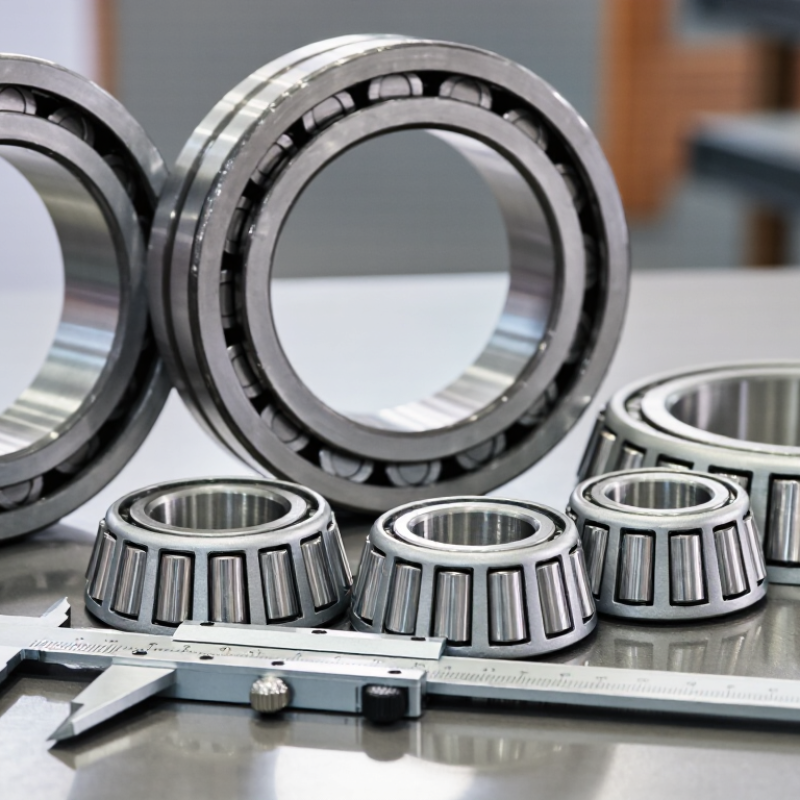
A double-row tapered roller bearing contains two rows of tapered rollers arranged between matching inner and outer raceways. The roller axes converge toward a common point, helping the bearing manage radial loads and axial loads in both directions. Its defining feature is not simply “two rows.” The paired geometry also determines how loads are shared, how much internal clearance remains, and whether preload is built into the assembly. That distinction matters.
ISO 281:2007 uses a 90% reliability basis for the basic rating life, L10, of a bearing under specified operating conditions. This is a statistical rating, not a promise that each unit will reach that life. In practice, load, lubrication, contamination, and mounting can change performance substantially. A double-row design can simplify a compact support arrangement, but it cannot correct poor alignment or inadequate lubrication. Small details count: a rough raceway, excess play, or a dry patch can undermine the expected service life. Geometry alone is not the whole answer.
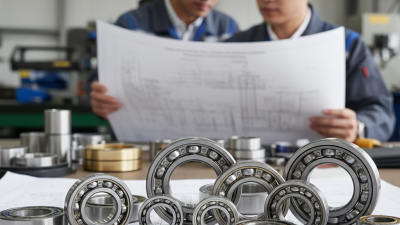
A double-row tapered roller bearing has two rows of tapered rollers and is designed to support axial loads in both directions, as well as radial loads. A single-row bearing typically supports axial load in one direction. The right choice depends on the required load, speed, dimensions, and operating conditions—not row count alone.
What Is the Best China Double Row Tapered Roller Bearing?
How Its Two Rows of Rollers Carry Combined Loads
A double-row tapered roller bearing handles radial force and axial force through two angled roller rows. Radial load presses the rollers across their raceways. The tapered contacts also create axial force, which the paired rows resist in opposite directions. This arrangement suits gearboxes, wheel hubs, and other assemblies where loads change direction. The load is shared, but not always evenly.
Fit matters. Shaft deflection, housing alignment, internal clearance, and preload can shift more force onto one row. A practical check is to inspect contact patterns and operating temperatures after installation. Uneven heating may signal excess preload or poor alignment. Small details matter.
For life estimates, ISO 281:2007, the rolling-bearing rating-life standard, defines basic rating life (L10) at 90% reliability under its stated conditions. That is a statistical rating, not a promise for every bearing. Lubrication, contamination, speed, and mounting can change actual service life. Engineers should calculate combined loads and verify the selected bearing against real duty-cycle data. Real machines are messier than spreadsheets. I would revisit the assumptions whenever loads include shock or frequent reversals.
Choosing a China-made double row tapered roller bearing starts with the application, not the catalog photo. Measure the shaft diameter, housing bore, and available width carefully. A small dimensional mismatch can create heat, vibration, and premature wear. The bearing’s dynamic and static load ratings should exceed the calculated radial and axial loads, with a practical safety margin.
Contact angle matters because it affects combined-load capacity. Higher angles usually support more axial force, but may increase friction and operating temperature. Check the internal clearance and mounting adjustment requirements. Too little clearance can cause overheating. Too much can produce impact, noise, and uneven raceway marks. Precision class, roundness, and roller geometry also deserve attention, especially in machine tools, gearboxes, and wheel-end assemblies.
Material quality is equally important. Ask for information about steel cleanliness, heat-treatment depth, hardness, and dimensional inspection. Certificates, batch traceability, and test records make technical claims easier to verify. In field inspections, I have found that grease selection and contamination control often matter as much as the bearing rating. Seals, if used, must match speed, temperature, and moisture exposure. I once focused heavily on load capacity and overlooked housing distortion; the bearing still ran poorly. That mistake changed my inspection checklist. Do not assume every supplier measures accuracy in the same way. Request test methods, tolerances, and actual inspection data before comparing prices.
Assess quality through measurements, not a polished catalogue image. Check both row sets for smooth rotation, consistent roller spacing, and clean raceway surfaces. A dial indicator can reveal runout; a micrometer can verify bore and outside diameter against the drawing. Fit matters. Too much interference can reduce operating clearance, while a loose seat may allow ring creep. Confirm the shaft, housing, load, speed, and temperature before choosing a fit. There is no universal “best” clearance.
Use ISO 281 as a useful comparison tool. It defines basic rating life, L10, as the life that 90% of a sufficiently large group of identical bearings is expected to reach under specified conditions. The calculation uses dynamic load rating C and equivalent load P; for roller bearings, the life exponent is 10/3.
This is a model, not a service-life promise. Contamination, poor lubrication, misalignment, and installation damage can shorten real operating life. ISO 15243 also provides a framework for classifying bearing damage, helping inspectors distinguish fatigue from wear or corrosion.
Manufacturer reliability needs evidence. Request material and heat-treatment records, dimensional inspection results, traceability for each production batch, and documented load-test methods. Check whether sample reports match the bearing’s stated designation and tolerances. Ask how defects are handled, too.
A confident answer is useful; a repeatable process is better.
Even a careful audit has limits, and I would not judge a supplier from one sample alone.
A good China-made double row tapered roller bearing is chosen by load, speed, and operating conditions, not by origin alone. Its two rows of rollers support combined radial and axial loads, making it suitable for wheel hubs, industrial gearboxes, heavy conveyors, mining equipment, and rolling mills. The design also controls shaft movement under changing loads. However, a larger bearing is not automatically better.
ISO 281 defines basic rating life as the point at which 90% of identical bearings are expected to survive under stated conditions. Engineers calculate this life using dynamic load ratings, actual loads, speed, and lubrication. The U.S. Department of Energy’s Operations & Maintenance Best Practices guide identifies poor lubrication, contamination, and misalignment as recurring causes of rotating-equipment failure. In practice, clean grease matters more than impressive catalog figures. A small sealing mistake can ruin a new bearing.
Maintenance should include vibration checks, temperature readings, shaft alignment, and controlled grease quantities. Operators should inspect for rust-colored grease, pitting, unusual noise, and rising housing temperature. ISO 15243 helps classify visible bearing damage, including fatigue, wear, corrosion, and electrical erosion. I would also verify hardness, dimensional inspection records, and traceability before installation. Perfect maintenance is unrealistic. Yet ignoring early vibration is an avoidable decision. Many failures begin quietly, often beside a loose seal or an over-tightened nut.